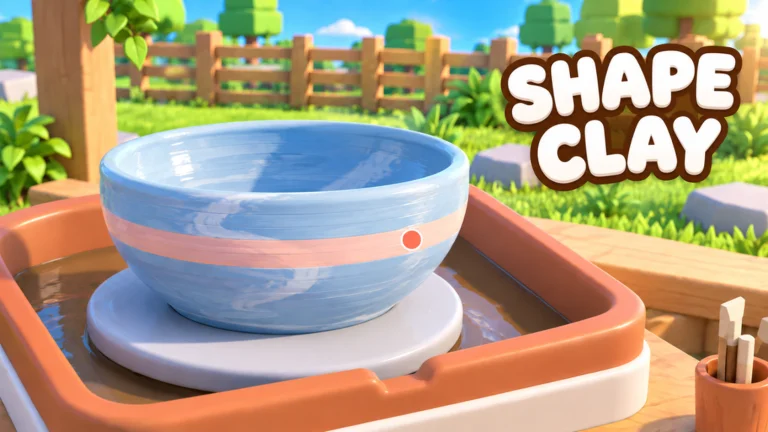
- Create Pottery pottery book: the full workflow of clay, wheel, glaze, kiln, and shop sales
- Clay tiers matter: save Premium and Rare clay for high-value pieces
- Shape before finishing: fix the form on the wheel before glazing or firing
- Gems are for growth: spend them on shop upgrades, not low-impact purchases
- Hire late: employees pay off only after the core production loop is stable
The Create Pottery Pottery Book: Core Workflow
Think of the Create Pottery pottery book as one continuous cycle: collect clay, shape it on the Pottery Wheel, apply Glaze, fire it in the Kiln, and sell the finished piece in your shop. Every system in the game — phone Jobs, Gems, employees, shop upgrades — exists to support or accelerate that cycle. Players who learn the full loop first progress faster than players who chase individual features.
| Stage | Action | Output | Key Rule |
|---|---|---|---|
| 1. Materials | Collect or roll for Clay | Raw material | Save rare clay for premium runs |
| 2. Shaping | Center and raise clay on the wheel | Green (unfired) form | Fix shape flaws before finishing |
| 3. Decoration | Apply Glaze and decorations | Prepared piece | Glaze cannot rescue a bad form |
| 4. Firing | Complete the Kiln stage | Finished pottery | Finish firing before selling |
| 5. Sales | Sell in shop or via Jobs | Cash and Gems | Reinvest income into upgrades |
Each stage builds on the previous one. A rushed shape limits the value of even the best glaze, and an unfired piece cannot be sold at all. Complete the full cycle every time rather than stopping halfway.
Clay Tier List: What to Spend and What to Save
Clay is judged by more than rarity. Acquisition difficulty, crafting potential, and resale value together determine whether a material should be processed now or held for a stronger production opportunity.
| Tier | Clay Type | Rarity | Acquisition | Production Value | Recommended Use |
|---|---|---|---|---|---|
| S | Premium Clay | Highest | High | Highest | Save for high-value pottery runs |
| A | Rare Clay | High | Medium–High | High | Use when glaze and kiln capacity allow |
| B | Uncommon Clay | Medium | Moderate | Moderate | Regular income and progression |
| C | Common Clay | Low | Low | Low | Early game, practice, routine sales |
S Tier: Premium Clay
- Keep whenever possible
- Reserve for premium production
- Highest resale potential
A Tier: Rare Clay
- Use selectively
- Pair with quality glaze
- Strong mid-game income
B Tier: Uncommon Clay
- Process regularly
- Reliable daily production
- Good for practicing shapes
C Tier: Common Clay
- Spend freely
- Learn the full workflow
- Fund your first upgrades
Do not burn Rare or Premium Clay on routine practice pieces. Once the clay is spent, the value difference between a common pot and a premium pot is gone for that production cycle.
Step-by-Step: Making, Glazing, and Firing Pottery
Successful pottery making depends on controlling shape before finishing. Build the form carefully, decorate it fully, and only then fire.
Center the Clay on the Pottery Wheel
Place the clay and keep the form centered while the wheel spins. A centered start reduces uneven walls, leaning rims, and distortion. Make gradual adjustments — never change the shape too quickly.
Build the Main Shape
Raise the clay into your desired form, treating the base, body, shoulder, and opening as separate areas. A wider base looks more stable; keep both sides balanced for symmetrical vessels, and avoid thinning the neck before the lower body is complete.
Refine the Rim and Surface
Check the rim from multiple angles for uneven height, smooth bumps and sharp transitions on the outer wall, and preserve intentional decorative details. Corrections here are far easier than after glazing.
Apply Glaze
Add the final color and surface treatment. Inspect the whole piece before confirming, choose a finish that supports the shape's value, and never use glaze as a substitute for fixing a poor form.
Fire the Piece in the Kiln
The Kiln stage converts the prepared piece into a finished, sellable item. Confirm shape and glaze are complete before firing, and study which form and finish combinations produce the best shop results.
Sell and Reinvest
Move finished pottery into the shop workflow. Compare outcomes across shapes and finishes, then reinvest profits into upgrades that improve the next production cycle.
Track which shape, clay, and glaze combinations sell best, then repeat them to build a dependable production routine before experimenting with unusual forms.
Money and Shop Upgrade Strategy
The best income source changes as your studio grows. Match your methods and upgrade purchases to your current stage.
| Stage | Best Methods | Cash Focus | Gems Focus |
|---|---|---|---|
| Early Game | Sell finished pottery, phone Jobs, common clay | Build dependable cash flow from the full cycle | Save for meaningful shop features |
| Mid Game | Better clay, higher-value Jobs, shop operations | Prioritize higher-value clay pieces | Spend on repeatable-income upgrades |
| Late Game | High-value pottery, rare clay, employees, shop scale | Run multiple income channels together | Direct Gems to long-term expansion |
For shop upgrades, buy what removes your current bottleneck rather than spreading spending evenly:
| Upgrade Area | Priority | Best Time to Buy |
|---|---|---|
| Production capacity | High early | When output outpaces processing or sales |
| Sales efficiency | High when sales lag | When finished items pile up unsold |
| Customer income | Medium–High | After traffic and inventory are consistent |
| Shop expansion | Medium | Once the basic loop is reliable |
| Business scale | Late game | After core workflow upgrades are done |
Upgrade production and sales capacity together. Extra output that cannot be sold is wasted, and empty shelves waste customer traffic.
Jobs, Employees, and Daily Routine Checklist
Jobs: Check the Jobs menu on your phone before every session so normal pottery work also advances objectives. Prioritize Jobs that match your routine — production, sales, or upgrades — and claim rewards immediately to fund the next goal.
Employees: Hiring too early drains income; hiring too late leaves production or sales unattended. Add staff only when extra output or sales activity justifies the ongoing cost, and upgrade employees after the shop has enough demand to keep them productive.
Daily Studio Routine:
- Check the phone Jobs menu before crafting
- Stock enough Clay for a full production session
- Complete a full wheel-glaze-kiln cycle
- Sell finished pieces and compare sale values
- Reinvest profits into the current bottleneck upgrade
Employees should support profitable growth, not replace it. If income is tight, return to core shop upgrades and stable production before adding staff.
FAQ
Q: What is the Create Pottery pottery book workflow?
Collect Clay, shape it on the Pottery Wheel, apply Glaze, fire it in the Kiln, and sell the finished piece in your shop. Every other system — Jobs, Gems, employees — supports this core cycle.
Q: Which Clay should I save instead of spending?
Save Premium (S Tier) and Rare (A Tier) Clay for high-value pottery runs. Use Common and Uncommon Clay for routine sales, practice, and early-game progression.
Q: Can glaze fix a badly shaped pot?
No. Glaze adds color and surface quality, but it cannot correct an unstable or uneven form. Fix shape and rim issues on the wheel before decorating or firing.
Q: When should I hire my first employee?
Wait until the core production loop is stable and income covers the cost. Hire for whichever part of the studio most often stops your progress — production or sales.