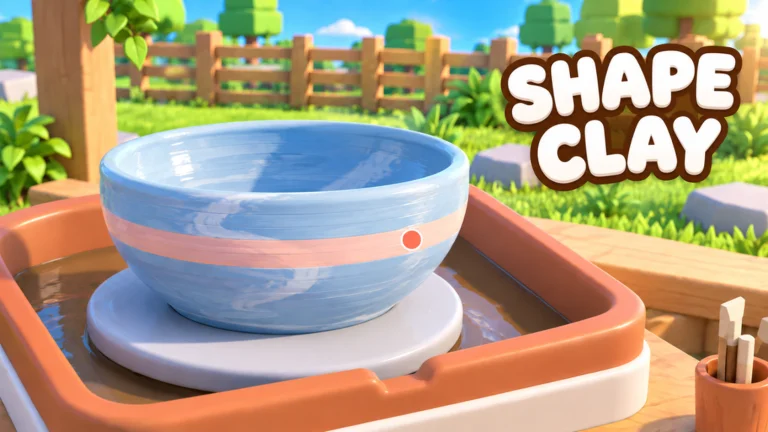
- New studio start: A Create Pottery new studio begins with clay, the pottery wheel, and your first sale.
- Core loop: Shape, glaze, fire, and sell — repeat this cycle to build steady income.
- Smart spending: Reinvest early profits into production capacity before cosmetic upgrades.
- Staffing rule: Delay hiring employees until your core workflow and income are stable.
- Bonus income: Check the phone Jobs menu before every production session.
Starting Your Create Pottery New Studio
A Create Pottery new studio starts small: one pottery wheel, a supply of clay, and a shop counter waiting for its first customer. Developed by Team Lychee on Roblox, the game rewards players who master the full production cycle early instead of chasing every feature at once.
Your first hours decide how quickly the business scales. Focus on completing the basic workflow repeatedly — collect clay, shape it on the wheel, apply glaze, fire the piece in the kiln, and sell the finished pottery. Each completed cycle generates cash and teaches you which shapes and finishes sell best.
Stage 1: Starter Studio
- Goal: Complete the full pottery cycle
- Use common clay freely
- Learn wheel control and glazing
- Sell every finished piece
Stage 2: Growing Studio
- Goal: Reinvest sales income
- Save rare clay for premium pieces
- Add phone Jobs to your routine
- Buy bottleneck-solving upgrades
Stage 3: Established Business
- Goal: Automate and expand
- Hire employees for routine work
- Run multiple income channels
- Expand shop scale and capacity
Every decision in a new studio should answer one question: what is currently limiting my income? Fix that bottleneck first — production, sales speed, or shop capacity — before buying anything cosmetic.
Clay and Material Management
Not all clay is equal. Judging clay by rarity alone is a common mistake — acquisition difficulty and production value matter just as much when deciding whether to process a material now or save it.
| Tier | Clay Type | Rarity | Best Use | Priority |
|---|---|---|---|---|
| S | Premium Clay | Highest | High-value pottery, premium production runs | Keep whenever possible |
| A | Rare Clay | High | Valuable pieces when glaze and kiln capacity allow | Use selectively |
| B | Uncommon Clay | Medium | Regular income and progression | Process regularly |
| C | Common Clay | Low | Early-game pottery and learning the workflow | Spend freely |
A practical rule for new studio owners: burn common clay to build skill and cash flow, and bank rare clay until your shaping and finishing are consistent enough to justify it.
Do not waste rare clay on practice pieces while you are still learning wheel control. Uneven walls and leaning rims waste material that belongs in your later high-value production runs.
The Production Workflow, Step by Step
The pottery workflow has six stages, and quality at each stage compounds into the final sale value.
| Stage | Action | Key Checkpoint |
|---|---|---|
| 1 | Center the clay on the wheel | Shape stays centered and stable while spinning |
| 2 | Build the main shape | Base, body, shoulder, and opening stay balanced |
| 3 | Refine the rim and surface | Even rim height, no bumps on the outer wall |
| 4 | Apply glaze | Consistent finish across the entire piece |
| 5 | Fire in the kiln | Shape and glaze confirmed complete before firing |
| 6 | Sell the finished pottery | Compare values before selling; reinvest profits |
Center and stabilize
Place the clay on the pottery wheel and keep the form centered while it spins. A centered start reduces uneven walls and accidental distortion. Make gradual adjustments rather than rapid changes.
Build a balanced form
Raise the clay into shape, controlling the base, body, and opening as separate areas. A wider base reads as more stable; keep both sides visually balanced for symmetrical vessels.
Refine before finishing
Correct the rim from multiple angles and smooth the surface now — small fixes are far harder after glazing or firing.
Glaze and fire
Apply glaze evenly, inspect the whole piece, then complete it in the kiln. Never treat glaze as a fix for a poorly shaped form.
Sell and repeat
Move finished pottery into the shop, compare sale outcomes across shapes and finishes, and repeat your best-performing combinations.
Track which shape-plus-glaze combinations sell best. Turning your best results into a repeat production routine is how a new studio becomes a reliable income machine.
Money and Shop Upgrades
Income sources shift as the studio grows. Match your strategy to your stage.
| Stage | Best Methods | Cash Focus | Efficiency Tip |
|---|---|---|---|
| Early Game | Sell pottery, phone Jobs, use common clay | Build dependable cash flow from the full cycle | Craft while checking the phone for Jobs |
| Mid Game | Better clay, higher-value Jobs, shop improvements | Reinvest into production and selling features | Save rare clay for strong-selling pieces |
| Late Game | High-value pottery, shop expansion, employees | Run multiple income channels together | Use staff to cut downtime |
Shop upgrades should target whichever bottleneck is actually limiting earnings:
| Upgrade Area | Priority | Buy When |
|---|---|---|
| Production capacity | High early | Finished pieces pile up faster than you can process or sell them |
| Sales efficiency | High when sales lag | Items accumulate faster than customers buy |
| Shop expansion | Medium | Basic production loop is reliable and income is regular |
| Customer income | Medium-high | Shop has steady traffic and enough stock |
| Business scale | Late game | Core upgrades are done and income is stable |
Balance production capacity with sales efficiency. Maxing production while sales stall just creates unsold inventory instead of income.
Jobs and Employee Hiring
Phone Jobs provide structured objectives that stack on top of your normal routine. Always open the Jobs menu before a production session so your shaping, firing, and selling actions also progress active objectives. Prioritize Jobs that overlap with what you are already doing — a sales task completed during regular shop activity costs almost no extra time.
Employees reduce manual workload, but timing matters:
| Growth Stage | Hiring Advice |
|---|---|
| Starting studio | Delay hiring — stabilize the core loop and income first |
| Growing studio | Hire for your biggest bottleneck: production or sales |
| Busy shop | Add staff to keep routine work moving while you focus on upgrades |
| Established business | Upgrade employees after capacity and demand justify it |
| Optimization phase | Balance staff costs against actual output gains |
Hiring too early drains cash that your studio needs for essential upgrades. If income tightens, return to core upgrades and stable production before adding more staff.
New Studio Milestones
New Studio Checklist:
- Complete the full pottery cycle from clay to sale
- Identify your best-selling shape and glaze combination
- Save first rare clay for a high-value piece
- Buy the upgrade that fixes your current bottleneck
- Complete a phone Job during a normal production session
- Hire your first employee once income is stable
FAQ
Q: What should I do first in a Create Pottery new studio?
Complete the full production cycle repeatedly: get clay, shape it on the pottery wheel, apply glaze, fire the piece in the kiln, and sell it. Mastering this loop generates the steady income that funds every later upgrade.
Q: Should I use rare clay early in the game?
No. Save rare and premium clay for when your shaping and finishing are consistent. Practice with common clay, which is cheap and plentiful, then reserve higher-tier materials for high-value production runs.
Q: When is the right time to hire employees?
Wait until your core workflow and shop income are stable. Hire for whichever bottleneck stops progress most often — production support if pottery is made too slowly, or sales support if finished pieces are waiting for customers.
Q: How do phone Jobs fit into daily play?
Check the Jobs menu before each production session and pick objectives that match your planned activity. Jobs that overlap with regular crafting and selling are the most efficient because they require little extra effort.