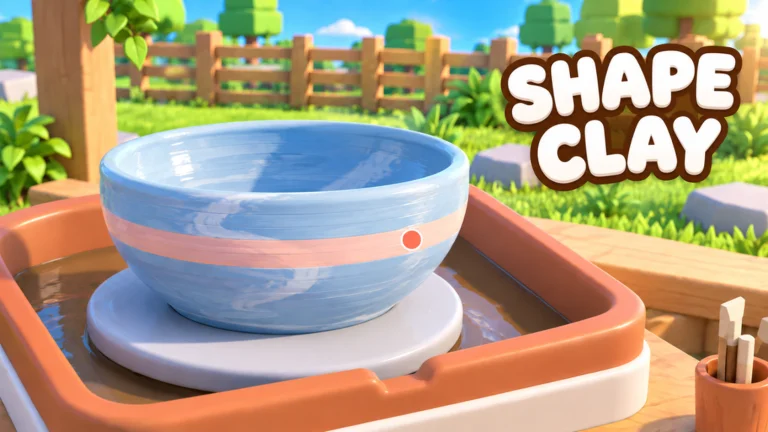
- Create Pottery apprentice path: Learn clay, wheel, glaze, kiln, and selling in order
- First goal: Complete one full pottery cycle before spending Gems on upgrades
- Income basics: Sell finished pottery and stack phone Jobs for early cash flow
- Clay rule: Save rare clay for high-value pieces; spend common clay freely
- Hiring timing: Wait to hire employees until your core production loop is stable
Create Pottery Apprentice: What the Game Is About
Create Pottery is a relaxing Roblox pottery simulator developed by Team Lychee. As a new apprentice, your job is to collect Clay, shape it on a pottery wheel, apply glaze, fire pieces in the kiln, and sell finished work in your shop. As you grow, phone Jobs, Gems, and employees turn a small studio into a pottery business.
You can try it yourself on the official Roblox game page.
Core Crafting Loop
- Clay collection
- Wheel shaping
- Glaze and kiln finishing
Business Layer
- Shop sales
- Phone Jobs
- Gems and upgrades
Late-Game Systems
- Employee hiring
- Rare Clay processing
- Studio expansion
Master the full crafting cycle first. Gems, Jobs, and employees all make more sense once shaping, glazing, firing, and selling feel routine.
The Apprentice Workflow: Clay to Cash
Every apprentice should follow the same six-step loop. Each finished cycle produces cash you can reinvest into better clay, upgrades, and eventually staff.
| Step | Action | Why It Matters |
|---|---|---|
| 1 | Get Clay | Different clay types affect finished piece value |
| 2 | Shape on the wheel | A stable form is easier to decorate and fire |
| 3 | Apply glaze | Adds color and improves final presentation |
| 4 | Fire in the kiln | Turns the piece into a sellable finished item |
| 5 | Sell in the shop | Funds materials, upgrades, and expansion |
| 6 | Use Gems, Jobs, employees | Accelerates progression as income grows |
Stock Clay Before Crafting
Keep a supply ready before each session. Save rarer Clay for higher-value creations and use common Clay while learning the workflow.
Shape a Stable Form
Center the clay on the Pottery Wheel and adjust gradually. Fix any lean in the body before refining the rim; a rushed shape is hard to rescue later.
Glaze and Fire
Apply glaze evenly once the form is final, then complete the kiln stage. Never start firing before the shape and glaze are finished.
Sell and Reinvest
Compare finished piece values before selling, then channel income into the next production cycle and useful shop upgrades.
Glaze cannot fix a poorly shaped piece. Correct the form on the wheel first, or the flaw will remain after firing.
Clay Tier List for New Apprentices
Clay should be judged by acquisition difficulty, crafting potential, and selling value, not rarity alone. This tier list helps you decide what to spend now and what to save.
| Tier | Clay Type | Rarity | Recommended Use | Priority |
|---|---|---|---|---|
| S | Premium Clay | Highest | High-value pottery, premium runs | Keep whenever possible |
| A | Rare Clay | High | Valuable pottery when glaze and kiln capacity allow | Use selectively |
| B | Uncommon Clay | Medium | Regular income and progression | Process regularly |
| C | Common Clay | Low | Early pottery, routine sales, learning | Spend freely |
Early on, burn through Common and Uncommon Clay to build skill and cash flow. Reserve Rare and Premium Clay until your glaze choices and firing routine are consistent.
Money Guide by Progression Stage
Your best income source shifts as the studio develops. Here is how to focus cash and Gems in each stage.
| Stage | Best Methods | Cash Focus | Gems Focus |
|---|---|---|---|
| Early | Sell pottery, phone Jobs, efficient common Clay | Build dependable cash flow with the full cycle | Save for useful shop features |
| Mid | Better Clay, higher-value Jobs, shop operations | Prioritize higher-value clay pieces | Spend on repeatable-income upgrades |
| Late | High-value pottery, rare Clay, shop expansion, employees | Run multiple income channels together | Direct toward long-term expansion |
Keep crafting while checking the phone for Jobs so production and task rewards progress at the same time. Prioritize Jobs that overlap with what you are already doing rather than treating each task as a separate errand.
Shop Upgrades and Hiring Employees
Upgrades should remove your current bottleneck, not just look good. Employees are the same: hire to solve a specific problem.
| Upgrade Area | Priority | Best Time to Buy |
|---|---|---|
| Production capacity | High early | When pieces are produced faster than they can be sold |
| Sales efficiency | High when sales bottleneck | When finished items pile up unsold |
| Customer income | Medium-high | Once customer activity is consistent |
| Shop expansion | Medium | After the basic loop is reliable |
| Business scale | Late game | Once core workflow upgrades are in place |
Hire Too Early
- Costs drain income
- Slows essential upgrades
- Little work for staff to do
Hire at the Right Time
- Covers a real bottleneck
- Keeps workflow continuous
- Extra output justifies the expense
If income is tight, return to core shop upgrades and stable pottery production before adding more employees. Staff should support profitable growth, not replace a healthy sales cycle.
Apprentice Milestones Checklist
Your First Weeks as a Pottery Apprentice:
- Complete a full clay-to-sale pottery cycle
- Learn wheel shaping without leaning rims
- Save first Rare Clay for a high-value piece
- Stack phone Jobs with regular production
- Buy a production or sales upgrade that removes a bottleneck
- Hire the first employee once income is stable
When routine production runs without your constant attention and Jobs are completed alongside normal play, you have moved past the apprentice stage and into studio management.
Apprentice FAQ
Q: What should a Create Pottery apprentice do first?
Collect Clay, shape a simple piece on the pottery wheel, glaze it, fire it in the kiln, and sell it. Completing one full cycle teaches the entire core loop before you touch Gems, Jobs, or employees.
Q: Should I sell rare pottery right away?
Only if you need the cash. Rare and Premium Clay is generally more valuable when saved for a higher-value piece made once your shaping, glaze, and firing routine is reliable.
Q: When should I hire my first employee?
Hire once your core production loop is stable and income can cover the cost. Choose an employee that addresses your biggest bottleneck, whether that is production speed or unsold inventory.
Q: Are phone Jobs worth doing as a beginner?
Yes. Check the Jobs menu before each production session and prioritize tasks that overlap with what you already plan to do, such as making, firing, or selling pottery.