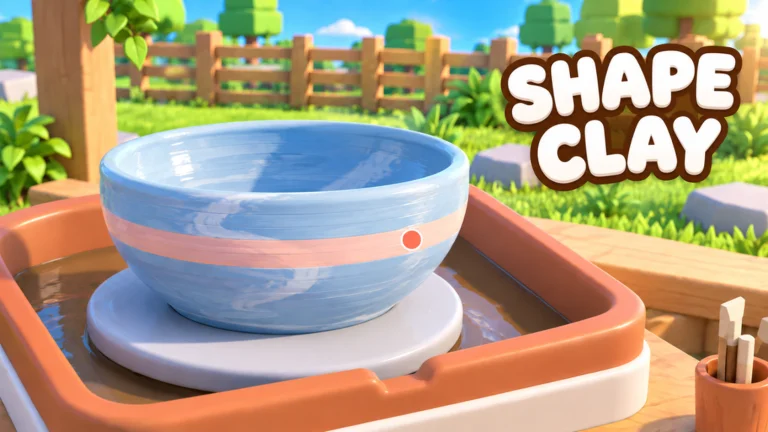
- Create Pottery tips start with mastering the wheel: center clay before shaping anything ambitious.
- Glaze is finishing, not fixing — correct the shape first, then apply color and decoration.
- Sell every finished piece early on; consistent sales beat experimental designs while you learn.
- Check phone Jobs before each session so normal production also advances objectives.
- Hire employees only after the core craft-sell loop generates stable income.
Core Create Pottery Tips for Every Session
Create Pottery, the relaxing Roblox pottery simulator by Team Lychee, rewards players who build a repeatable routine: collect clay, shape on the wheel, glaze, fire, and sell. The single most valuable habit is checking your phone Jobs menu before you start crafting, so every piece you make also progresses an active objective instead of requiring a separate detour.
| Tip | Why It Matters | Difficulty |
|---|---|---|
| Center clay before shaping | Prevents leaning rims and uneven walls | ★☆☆☆☆ |
| Check Jobs before crafting | One session advances multiple goals | ★☆☆☆☆ |
| Save rare clay for premium pieces | Higher sale value per firing cycle | ★★☆☆☆ |
| Keep a clay stockpile | Avoid mid-session material runs | ★☆☆☆☆ |
| Sell everything early game | Builds dependable cash flow | ★☆☆☆☆ |
Start every play session the same way: open the Jobs menu, pick objectives that match your planned production, stock enough clay, then run full wheel-to-kiln cycles. Consistency compounds into income faster than any single clever trick.
Pottery Wheel Shaping Tips
Shaping is where most of your product value is decided. Treat the base, body, shoulder, neck, and rim as separate zones and work from the bottom up.
Center the clay
Keep the form centered while the wheel spins. A centered start reduces distortion and makes every later adjustment easier. Make gradual changes rather than aggressive ones.
Build the main body
Raise the walls and set the silhouette. A wider base reads as more stable; keep both sides visually balanced for symmetrical vessels.
Refine the rim last
Never thin the neck or rim before the lower body is finished. Check the opening from multiple angles and smooth bumps before moving on.
Avoid thinning the rim too early, changing the shape too quickly, and continuing to build on a form that has already started to lean. Correct the body first — a leaning piece only gets worse as you add height.
Glaze and Kiln Tips
Glazing and firing turn a shaped form into a finished, sellable product. Neither stage can rescue a bad shape, so treat them as finishing steps.
| Stage | Key Tip | Result |
|---|---|---|
| Glaze | Inspect the whole piece before confirming | Even, consistent color after firing |
| Glaze | Match finish to the piece's intended value | Higher perceived and sale value |
| Kiln | Finish shape and glaze completely first | Fewer wasted firing cycles |
| Kiln | Repeat successful shape-glaze combos | Reliable production routine |
| Selling | Compare finished pieces before selling | Learn which designs earn most |
Once your basic production cycle is stable, test experimental forms and glaze pairings. Track which combinations sell best, then repeat the winners. Early on, prioritize consistent quality over creativity — dependable output is what funds your first upgrades.
Money-Making Tips by Progression Stage
Your best income source shifts as the studio grows. Match your strategy to your stage instead of copying late-game approaches too early.
Early Game
- Sell every finished piece
- Complete phone Jobs alongside crafting
- Use common clay freely to learn the loop
- Save Gems for impactful shop features
Mid Game
- Process higher-value clay
- Take tougher, better-paying Jobs
- Reinvest sales into production upgrades
- Reserve rare clay for premium pieces
Late Game
- High-value pottery at scale
- Expand and operate the shop
- Employees reduce downtime
- Multiple income channels run together
Route profitable sales back into upgrades that remove your current bottleneck — production capacity when pieces pile up unfired, sales efficiency when finished pottery waits for customers. Avoid dumping everything into one category while another limits your earnings.
Employee and Jobs Tips
Employees are powerful but costly. The right time to hire is when part of your workflow regularly stalls without you.
| Situation | Recommended Action |
|---|---|
| Core loop not yet stable | Delay hiring; build savings and skill first |
| Production is the bottleneck | Hire production support first |
| Finished pieces wait for customers | Hire sales/shop support first |
| Shop is busy and growing | Add staff to keep routine work moving |
| Income feels tight | Pause hiring; return to core upgrades |
Combine Jobs with your normal routine. Production Jobs overlap with a full wheel-to-kiln cycle, and sales Jobs overlap with regular shop traffic — just prepare inventory before starting a sales objective. Never buy an upgrade solely to finish a Job unless it also solves a real bottleneck.
Studio Growth Checklist:
- Master centered shaping on the pottery wheel
- Complete a full wheel-to-kiln cycle without errors
- Identify your best-selling shape and glaze combo
- Fund your first shop upgrade from sales income
- Hire your first employee to remove a real bottleneck
FAQ
Q: What is the most important Create Pottery tip for beginners?
Center the clay properly before shaping and complete the full cycle — shape, glaze, fire, sell — with every piece. A stable routine builds income faster than experimenting early.
Q: Should I glaze a piece to hide a bad shape?
No. Glaze adds color and finish, but it cannot fix a leaning or uneven form. Correct the shape on the wheel first, then glaze.
Q: When should I hire employees in Create Pottery?
Hire once the core craft-sell loop is stable and income covers the cost. Pick the employee that addresses your biggest bottleneck — production or sales — rather than hiring as soon as you can afford it.
Q: How do I use Gems efficiently?
Save Gems for upgrades and shop features that support repeatable income and expansion, rather than spending them early on low-impact options.