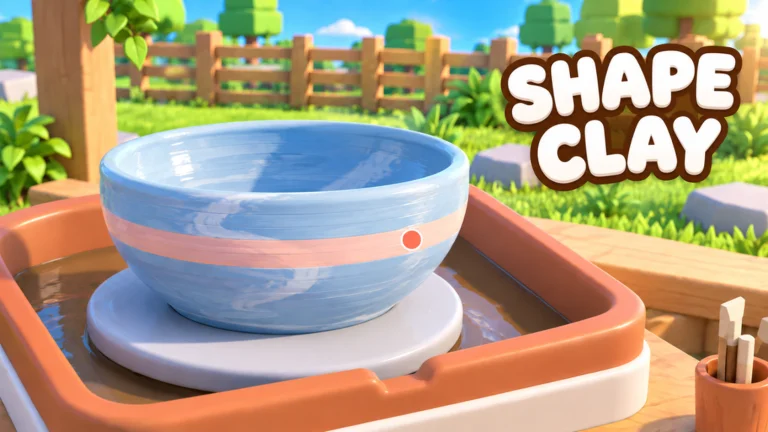
- Create Pottery shop: Your main income source, converting finished pottery into cash and growth capital.
- Core loop: Shape on the wheel, glaze, fire in the kiln, then sell completed pieces.
- Upgrade rule: Fix your current bottleneck first instead of spreading money across all categories.
- Boost income: Phone Jobs stack with shop sales for faster Gems and cash.
- Automation: Hire employees only when income reliably covers their ongoing cost.
How the Create Pottery Shop Works
The Create Pottery shop is the economic engine of your studio. Every piece you shape on the pottery wheel, glaze, and fire in the kiln eventually flows through the shop, where customers convert your finished work into cash. According to the official Create Pottery Roblox page, the core loop by Team Lychee! includes shaping clay, glazing, firing, selling in your shop, completing phone Jobs, earning Gems, and hiring employees.
Understanding the shop means understanding three connected systems:
- Production: how quickly you can create finished, sellable pottery.
- Sales capacity: how many finished pieces your shop can move to customers.
- Customer income: how much value each customer interaction generates.
A shop bottleneck in any one of these areas limits your total earnings, no matter how strong the other two are. Before spending money, identify which stage is holding you back.
If finished pottery is piling up unsold, your problem is sales capacity. If shelves are empty and customers have nothing to buy, your problem is production. Match every upgrade purchase to the actual weak link.
Best Ways to Earn Money at Every Stage
Your income strategy should change as the studio develops. Early on, reliable pottery sales and phone Jobs build your foundation. Later, rare Clay processing and employee automation multiply returns.
| Stage | Best Methods | Cash Focus | Gems Focus |
|---|---|---|---|
| Early Game | Sell finished pottery, phone Jobs, use common Clay | Build steady cash flow through full crafting cycles | Save Gems for useful shop features |
| Mid Game | Better Clay, higher-value Jobs, improve shop ops | Reinvest into production and selling upgrades | Spend on repeatable income improvements |
| Late Game | High-value pottery, rare Clay, shop expansion, employees | Run multiple income channels together | Direct Gems toward expansion purchases |
The most common early-game mistake is spending rare Clay on routine pieces. Reserve rarer Clay for pottery with stronger selling potential, and use common Clay for learning the workflow and daily income.
Compare the value of finished pieces before selling. Two pottery items that took similar effort can differ significantly in sale price depending on the Clay tier, shape quality, and glaze choices used.
Clay Tier List for Shop Value
Not all Clay is equal when it comes to shop revenue. Judge each material by rarity, acquisition difficulty, and the final production value it can support.
| Tier | Clay Type | Rarity | Production Value | Recommended Use | Priority |
|---|---|---|---|---|---|
| S | Premium Clay | Highest | Highest | High-value pottery, premium runs | Keep whenever possible |
| A | Rare Clay | High | High | Valuable pottery with good glaze capacity | Use selectively |
| B | Uncommon Clay | Medium | Moderate | Regular income and progression | Process regularly |
| C | Common Clay | Low | Low | Early-game pottery, routine sales | Spend freely |
Save Your Best Clay
- S-Tier Clay belongs in high-value pieces only
- Wait for good glaze and firing capacity
- One premium sale can outearn many routine ones
Keep the Cycle Moving
- Common Clay keeps daily income flowing
- Use it to learn shaping and glaze combos
- Never let the wheel sit idle waiting for rare material
Shop Upgrade Priorities Compared
Shop upgrades determine how effectively your studio converts finished pieces into income. Each upgrade area solves a different problem, and the right buy depends on which part of your workflow is currently limiting earnings.
| Upgrade Area | Priority | Best Time to Buy | Strategy |
|---|---|---|---|
| Production capacity | High early | When pieces are produced faster than processed | Choose before cosmetic upgrades |
| Sales efficiency | High when sales bottleneck | When finished items accumulate unsold | Balance with production capacity |
| Customer income | Medium to high | When customer activity is consistent | Most effective after capacity is solid |
| Shop expansion | Medium | After the basic loop is reliable | Bridge between starter shop and volume business |
| Business scale | Late-game | Once core upgrades are in place | Raises your ceiling, not your bottleneck |
Channel profitable sales back into the upgrade that removes your biggest current bottleneck. This single habit keeps income compounding instead of stalling.
Employees: When and How to Hire
Employees reduce manual workload and keep the studio productive, but hiring is a cost that must be justified by income. Timing matters more than quantity.
Stabilize the Core Loop
Before your first hire, learn the pottery wheel, complete full glaze and kiln cycles, and generate dependable shop income. Save enough to cover the first employee without pausing essential upgrades.
Hire Against the Bottleneck
Choose production support when pottery is not being made fast enough, or sales and shop support when completed pieces are waiting for customers.
Maintain Workflow Continuity
In a busy shop, employees handle routine work while you focus on shaping, Jobs, and upgrade decisions. Add staff only when extra output justifies the expense.
Upgrade Staff After Expansion
A larger shop creates more opportunities for automation to generate value. Prioritize employee improvements once capacity and customer demand keep upgraded staff productive.
If income gets tight, return to core shop upgrades and stable pottery production before adding more employees. Staff should support profitable growth, not replace a healthy sales cycle.
Daily Shop Routine and Checklist
The most efficient players combine Jobs with the normal shop routine instead of treating objectives as separate activities. Check the Jobs menu on your phone before each session so your pottery, shop, and upgrade actions all count toward active objectives.
Every Session Should Include:
- Check the phone Jobs menu before crafting
- Produce enough finished pottery to keep shelves stocked
- Save rare Clay for high-value pieces only
- Reinvest sales into the current bottleneck upgrade
- Claim Job rewards and review the next objectives
FAQ
Q: What is the main way to earn money in Create Pottery?
Selling finished pottery in your shop is the primary income source. Complete the full cycle - shaping, glazing, and firing - before selling, and compare piece values so rare Clay is not wasted on low-price items.
Q: Which shop upgrade should I buy first?
Buy whichever upgrade removes your current bottleneck. If finished pieces pile up unsold, prioritize sales efficiency. If shelves are empty, prioritize production capacity. Avoid spending everything on one category while another limits earnings.
Q: When should I hire my first employee?
Delay hiring until the core pottery loop is stable and income is dependable. Your first employee should target the part of the business that most often stops your progress, whether that is production or sales support.
Q: How do Jobs work with the shop?
Jobs are objectives found on the in-game phone. Prioritize Jobs that match what you are already doing, such as crafting, firing, or selling pottery, so one session advances production and task rewards at the same time.