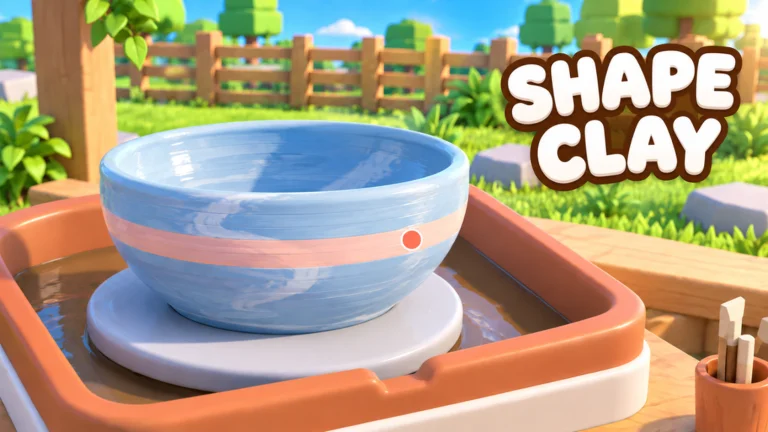
- Create Pottery clay types determine the value and potential of every piece you make.
- Premium and Rare clay should be saved for high-value pottery, not routine sales.
- Common clay is ideal for learning the wheel, glaze, and kiln workflow.
- Rarity, acquisition difficulty, and selling value all matter when judging clay.
- Match clay choice to your progression stage for the best income efficiency.
How Clay Types Work in Create Pottery
In Create Pottery, clay is the raw material behind the entire production loop: collect clay, shape it on the pottery wheel, apply glaze, fire it in the kiln, and sell the finished piece. Different clay types affect the value and potential of the finished pottery, so choosing which clay to spend and which to save is one of the most important decisions in the game.
Clay should be judged by more than rarity alone. Acquisition difficulty, crafting potential, and selling value all matter when deciding whether to process a material immediately or keep it for a stronger production opportunity.
| Factor | What It Means | Why It Matters |
|---|---|---|
| Rarity | How uncommon the clay type is | Higher rarity usually supports higher-value pottery |
| Acquisition difficulty | Effort or cost to obtain it | Hard-to-get clay deserves a better use than routine sales |
| Production value | Value of finished pieces made from it | Determines long-term income per crafting session |
| Selling potential | Final price in the shop | Guides which clay to pair with premium glazes |
Rare clay used on a rushed, poorly shaped piece is wasted. Build a stable form on the wheel first, then commit valuable clay, glaze, and kiln time to pieces worth selling at a premium.
Clay Tier List
The tier list below ranks clay types by rarity, acquisition difficulty, production value, and recommended use. Use it to decide which clay to spend now, save for premium pottery, or reserve for later progression.
| Tier | Clay Type | Rarity | Acquisition | Production Value | Priority |
|---|---|---|---|---|---|
| S | Premium Clay | Highest | High | Highest | Keep whenever possible |
| A | Rare Clay | High | Medium to high | High | Use selectively |
| B | Uncommon Clay | Medium | Moderate | Moderate | Process regularly |
| C | Common Clay | Low | Low | Low | Spend freely |
S-Tier: Premium Clay
- Highest rarity and value
- Hard to acquire
- Save for high-value pottery runs
- Pair with premium glaze and careful shaping
A-Tier: Rare Clay
- High production value
- Medium-to-high acquisition difficulty
- Use when decoration and firing capacity allow
- Avoid spending on practice pieces
B-Tier: Uncommon Clay
- Moderate value and availability
- Great for regular income
- Reliable mid-game workhorse material
- Good for improving crafting consistency
C-Tier: Common Clay
- Low rarity and value
- Easy to acquire
- Ideal for learning the full workflow
- Best for early-game routine sales
Do not judge clay by rarity alone. A moderate tier clay used efficiently in a stable production cycle often outearns premium clay wasted on rushed, low-quality pieces.
Clay Strategy by Progression Stage
Your clay strategy should evolve as your studio grows. The most effective income source changes as your business develops, so match clay usage to your current stage.
| Stage | Best Clay Approach | Income Focus | Key Tip |
|---|---|---|---|
| Early Game | Use Common Clay efficiently | Dependable cash flow from full pottery cycles | Learn the wheel, glaze, and kiln loop before spending better clay |
| Mid Game | Process Uncommon and Rare Clay selectively | Reinvest sales into production and shop features | Reserve rarer clay for pottery with stronger selling potential |
| Late Game | Run Premium Clay on high-value pieces | Multiple channels: premium sales, shop revenue, employees | Combine premium clay with upgrades that reduce downtime |
Keep crafting while checking the phone for Jobs so clay processing, task rewards, and shop income all progress together in a single session.
Step-by-Step: Getting the Most from Each Clay Type
Stockpile Before Crafting
Keep a supply of clay available before starting a crafting session, and sort your inventory by tier so you never burn premium material on practice runs.
Match Clay to the Piece
Choose the clay tier based on the intended product: Common for routine sales, Uncommon for steady income, Rare and Premium for high-value pieces with premium glaze.
Shape Carefully on the Wheel
Center the clay, build a stable main body, and refine the rim before moving on. A poor shape wastes whatever clay tier you committed.
Finish with Glaze and Kiln
Apply a glaze that supports the shape and intended value, then fire the piece to complete it. Inspect the whole piece before confirming the finish.
Sell and Reinvest
Compare the value of finished pieces before selling, then reinvest the income into clay access, shop upgrades, or employees that support larger production runs.
Clay Management Milestones:
- Build a stable clay stockpile before crafting sessions
- Reserve Rare and Premium Clay for high-value pieces only
- Master the full wheel-to-kiln cycle using Common Clay
- Track which clay and glaze combinations sell best in your shop
- Reinvest premium sales into shop upgrades and employees
Repeat successful clay, shape, and glaze combinations to build a reliable production routine, and use the finished results to identify which forms produce the best shop outcomes.
Clay vs. Other Income Sources
Clay processing is one of several income channels in Create Pottery. Compare it against the alternatives to decide where your time goes.
| Income Source | Clay Needed | Effort | Best Stage | Notes |
|---|---|---|---|---|
| Pottery sales | Yes | Medium | All stages | Core loop; value scales with clay tier and quality |
| Phone Jobs | Optional | Low | Early to mid | Overlaps with normal crafting and shop activity |
| Rare clay processing | Yes (Rare/Premium) | Medium to high | Mid to late | Highest value per piece; requires capacity |
| Shop management | No | Medium | Mid to late | Scales with upgrades and customer flow |
| Employees | No | Low ongoing | Late game | Automates routine work when income supports the cost |
Run multiple income channels by combining premium pottery sales with shop revenue and employee-supported operations rather than relying on a single source.
FAQ
Q: What are the main clay types in Create Pottery?
Clay types fall into four practical tiers: Premium (S), Rare (A), Uncommon (B), and Common (C). Each differs in rarity, acquisition difficulty, production value, and recommended use.
Q: Should I save rare clay or use it right away?
Use rare and premium clay selectively. Save it for high-value pottery runs when you have suitable decoration and firing capacity, and avoid spending it on routine practice pieces.
Q: Which clay is best for beginners?
Common Clay is the best starting material. It is easy to acquire and ideal for learning the full workflow from pottery wheel shaping through glazing, kiln firing, and shop selling.
Q: How do clay types affect income?
Higher-tier clay raises the selling potential of finished pottery. In the mid game, prioritize pottery made from higher-value clay and reinvest the sales into features that improve production and selling.